
Robert was advised to "watch and wait." 1Sage showed him why that was the dangerous choice.
Robert was advised to "watch and wait." 1Sage showed him why that was the dangerous choice.
Standard guidelines said his condition wasn't urgent yet. AI analysis revealed a hidden risk factor that changed his entire treatment plan.
Standard guidelines said his condition wasn't urgent yet. AI analysis revealed a hidden risk factor that changed his entire treatment plan.

Patient Name
Robert M.
Patient Name
Robert M.
Patient Name
Robert M.
Age
62
Age
62
Age
62
Profession
Architect
Profession
Architect
Profession
Architect
Diagnosis
Diagnosis
Aortic Stenosis with Stage 3 CKD
The Challenge
The "Gray Zone" Diagnosis
Robert was diagnosed with a heart valve issue (Aortic Stenosis) and early-stage kidney disease. His local cardiologist recommended a "watch and wait" approach, arguing that surgery was too risky given his kidney condition and that his symptoms weren't "severe enough" to warrant immediate intervention.
Robert felt stuck. He was fatigued and losing focus at work, but the experts were telling him he wasn't sick enough for surgery yet. He was terrified that waiting would cause his health to deteriorate beyond repair.
The Turning Point
Analyzing the Comorbidities
Robert used 1Sage to validate the "watch and wait" advice. Unlike a standard Google search, 1Sage didn't just look at "Heart Valve Surgery." It modeled outcomes for patients with dual-conditions (Cardiac issues + Renal insufficiency).
The platform analyzed thousands of similar patient profiles to predict the trajectory of his specific combination of health factors over the next 12 months.
The 1Sage Advantage
The Hidden Cost of Waiting
1Sage revealed that for patients with Robert’s specific kidney profile, the "watch and wait" strategy often led to irreversible organ damage, not stability.
Kidney Preservation: Data showed a 40% higher risk of permanent renal failure if surgery was delayed by more than 6 months.
The TAVR Option: 1Sage identified a minimally invasive procedure (TAVR) that had a 98% success rate for patients with his specific risk profile, bypassing the risks of open-heart surgery.
40%
Data showed 40% higher risk of permanent renal failure
40%
Data showed 40% higher risk of permanent renal failure
98%
Identified treatment with 98% success rate
98%
Identified treatment with 98% success rate
The Outcome
Proactive Care, Perfect Result
Armed with this report, Robert sought a second opinion from a specialist 1Sage flagged as a leader in "High-Risk TAVR" procedures. The specialist agreed with the AI's assessment: waiting was dangerous.
Robert underwent the procedure two weeks later. The intervention was successful, his energy returned immediately, and most importantly, his kidney function remained perfectly stable.
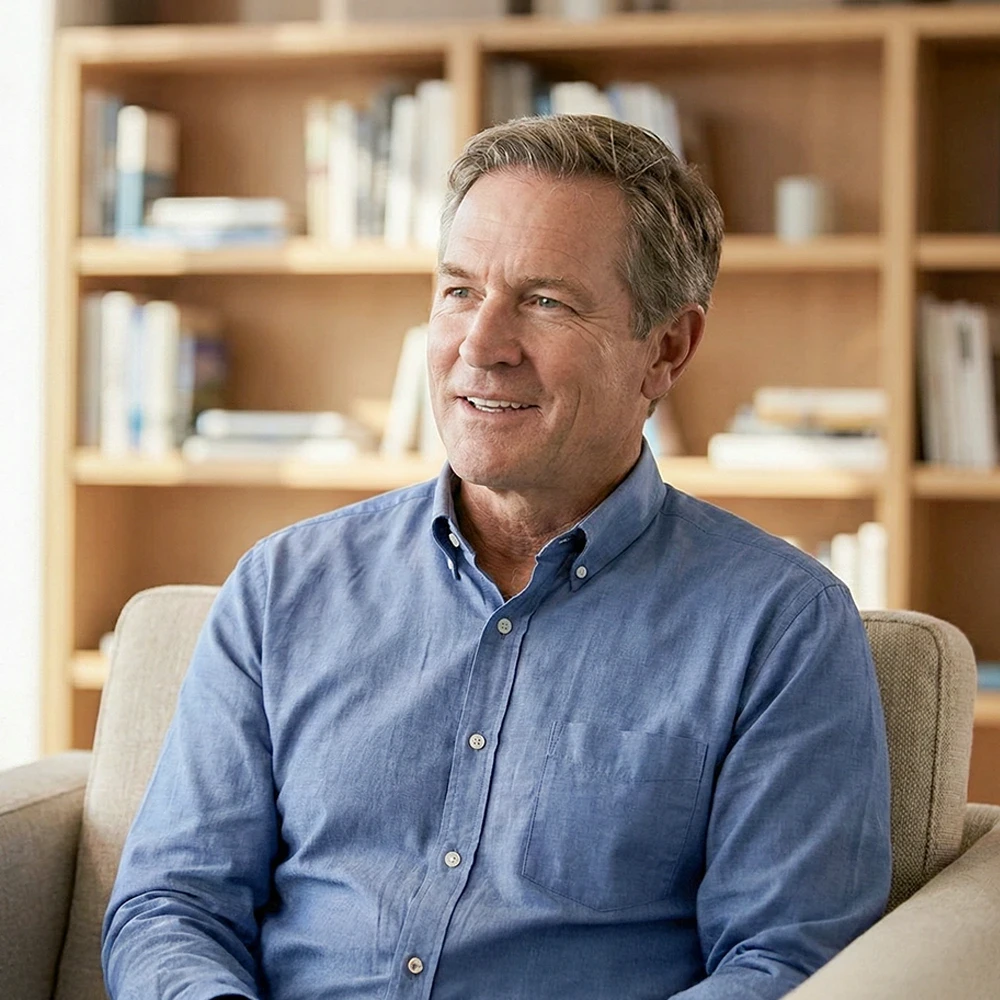
"My first doctor meant well, but he was following the standard playbook. 1Sage looked at my specific complexity and realized the standard playbook would have failed me."
Robert M.
Are you facing a similar decision?
Complex conditions require more than standard advice. See how 1Sage connects the dots between your unique symptoms to find the safest path forward.
Complex conditions require more than standard advice. See how 1Sage connects the dots between your unique symptoms to find the safest path forward.


Get Started
Built to support informed care decisions
We provide informational context to help patients and caregivers better understand care options and prepare for informed conversations with clinicians and insurers.



Get Started
Built to support informed care decisions
We provide informational context to help patients and caregivers better understand care options and prepare for informed conversations with clinicians and insurers.
Get Started
Built to support informed care decisions
We provide informational context to help patients and caregivers better understand care options and prepare for informed conversations with clinicians and insurers.